

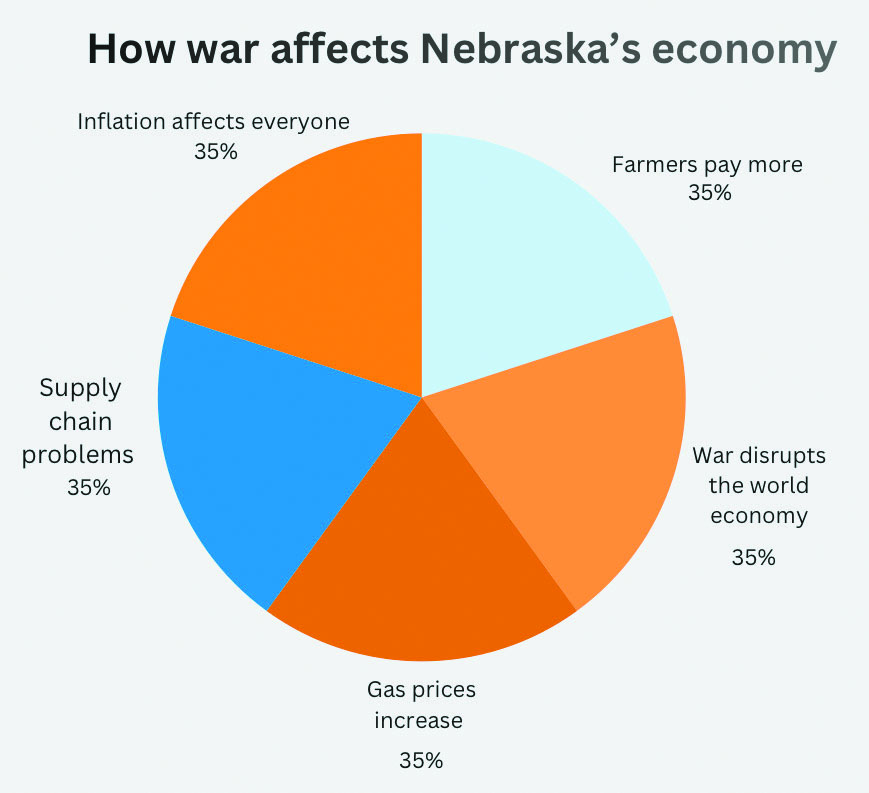
War does more than destroy nations; it also damages economies around the world by increasing inflation, raising prices, and disrupting daily life for millions of people.
As global conflicts continue, one of the most immediate effects people are seeing today is rising oil prices. According to Global Issues instructor Libby Walls, disruptions in key trade routes are playing a major role.
“There are major disruptions happening in the Strait of Hormuz, which is one of the most important waterways in the world,” Walls said. “Because so much oil passes through that one area, any disruption immediately affects global supply, which drives prices up.”
These rising oil prices are already affecting everyday costs. When fuel becomes more expensive, transportation costs increase, which impacts nearly every product in the United States. Businesses often raise prices to keep up, contributing to inflation across the economy. Students are noticing these changes in their daily lives.
“It cost 40 dollars to fill up my tank,” senior Lillian Hagan said.
Gas prices are one of the most visible examples of how global conflict directly affects individuals at home. Experts from Econmics Help have found that inflation is rising not just because of oil, but also because of increased demand and limited supply during wartime. Econmics instructor Carter Bruneau said that when governments, businesses, and citizens all compete for the same limited resources, prices rise quickly.
“There are many reasons why inflation may occur during times of war. If production can’t keep up with demand, then prices can skyrocket,” Bruneau said.
He explained that competition for resources plays a major role in rising costs. Businesses are quick to change prices in order to keep up with the economy.
“The more demand there is for a product, the more someone can usually charge for it,” Bruneau said.
In addition to rising prices, inflation is affecting people on a personal level. Many individuals are adjusting their financial decisions because of the economy.
“I am currently looking for a summer job to help with the costs of my student loans and in finding a new apartment. I’ve been impacted by inflation,” Bruneau said.
While some people believe war can sometimes benefit an economy, experts warn that this is not a reliable or ethical solution. Still, various discussions occur on weather or not war helps the economy.
“Historically there have been instances where war has helped an economy… but do I think engaging in war for the sake of improving one’s economy is a good thing? No,” Bruneau said.
There is also concern about a possible global recession. Walls explained that when inflation continues to rise, it can slow down spending and production.
“It can also lead to higher unemployment rates,” he said. “As demand decreases and production slows down, businesses may cut back, which can result in more people losing their jobs.”
Governments often try to control inflation through financial policies. Along with covering finances to reduce or control inflation.
“The standard solution the FED uses is to raise interest rates on loans,” Bruneau said. “With higher interest rates… less money is being spent… which can lead to prices dropping.”
However, he noted that this is not a perfect solution and may not completely stop inflation. The effects of war are not just short-term. Long after conflicts end, countries may struggle with debt, unemployment, and reduced economic growth. From rising gas prices to more expensive everyday goods, the impact of war continues to be felt around the world.
‘‘Do I think this [raising interest rates] is the perfect solution that will stop inflation completely? No.’’ Bruneau said.