

On February 6, U.S. President Trump and Argentinian President Javier Milei signed an agreement that would ease restrictions on goods imported and exported out of the countries.
This was done in an effort by Trump to ease food prices, particularly for beef, for American citizens. Currently, federal data notes that the prices of ground beef increased by 17.9% in December of last year. Nebraska Beef Council Executive Director Ann Marie Bosshamer notes that this is due to the lowering cattle numbers, particularly in Nebraska.
“We have seen over the last several years cows being sold, and therefore, some of the lowest cattle numbers nationwide in many, many years,” Bosshamer said. “So, that is why we have a higher beef price at this point.”
Bosshamer said that low cattle numbers are a result of the heavy drought conditions across Nebraska. The drought has caused many cattlemen to go without grass, making it difficult for them to raise and retain animals, especially cows.
“There has been across the United States, but certainly in the Beef Belt, starting in 2014, a drought that has happened,” Bosshamer said. “Specifically here in Nebraska, we have seen parts of our state very much in extreme drought conditions.”
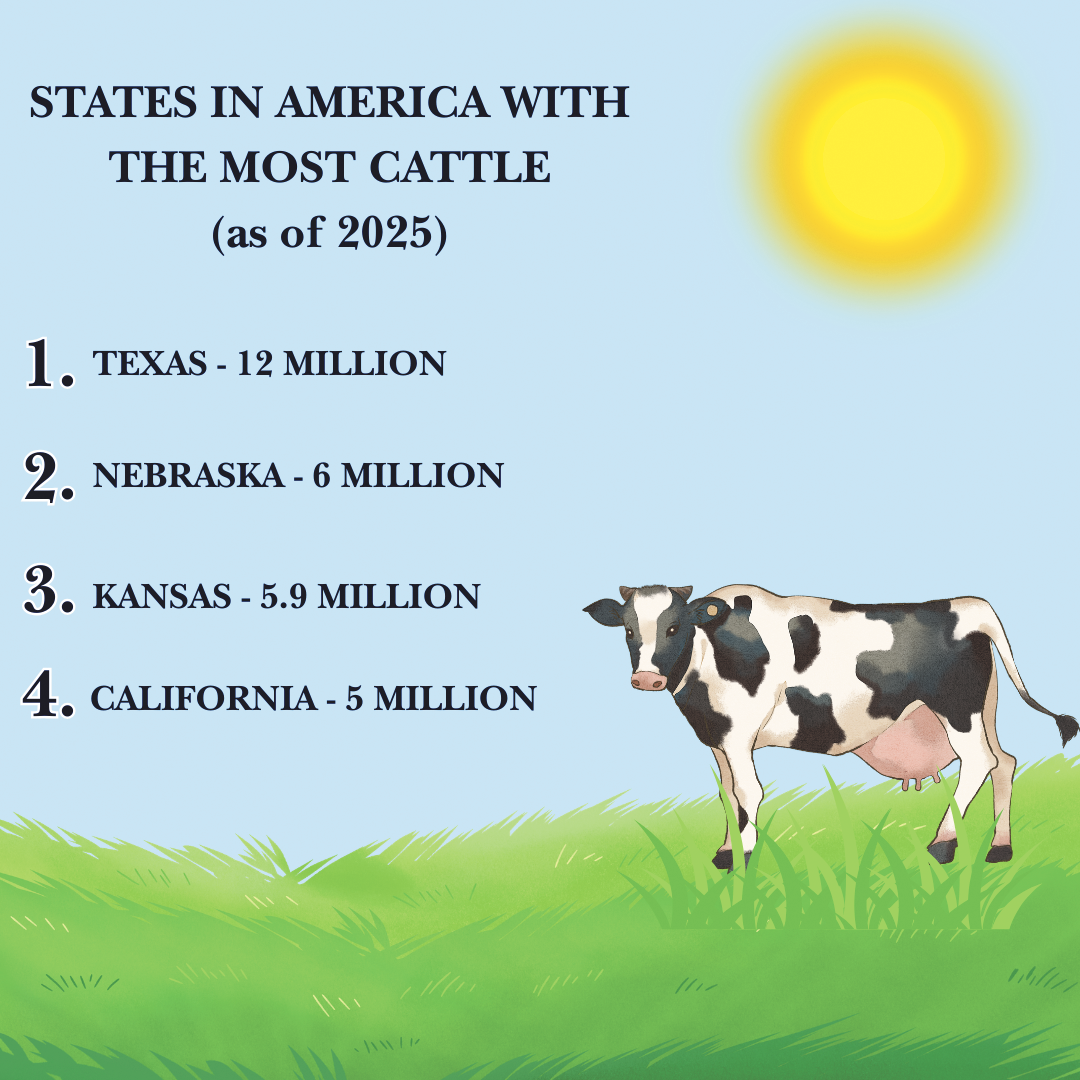
The U.S. Department of Agriculture’s (USDA) 2022 census of agriculture data found that Nebraska is one of the nation’s biggest beef producers (second only to Texas with 6.3 million cattle to 12 million cattle respectively). Now, Omaha Steaks, an internationally renowned company, has distributed beef products to and from all across the country since 1917 and sources their products from ranchers across the Midwest.
“The entire beef industry is currently operating in a period of historically tight cattle supply and elevated input costs,” Omaha Steaks Director of Public Relations and Corporate Communications Kathleen Al-Marhoon said. “While we are not immune to these pressures, our supply chain strategy and operational efficiencies allow us to absorb some volatility.”
Naturally, the result of low cattle numbers and high beef prices have posed issues to many, particularly consumers. The National Cattlemen’s Beef Association notes that nearly 70% of Americans eat beef at least once per week. Senior Blake Zimmerman is part of that number, noting that he consumes beef at least a couple of times a week.
“Just recently, there’s been a lot more worry about how much I want to spend every week when I go to the grocery store on meat, especially beef,” Zimmerman said. “It’s frustrating because I had the idea of how much I should be paying for my meals every week, and it’s just been constantly changing. It’s like another thing that I have to worry about among others.”
Due to affordability, a survey done by Physicians Committee for Responsible Medicine found that 60% of shoppers are planning on purchasing less beef, or not purchasing it at all. Similarly, Zimmerman says he is considering purchasing alternatives for protein.
“I’m leaning more towards other options like pork and chicken instead of beef, even though I enjoy that more,” Zimmerman said.
Bosshamer believes that currently, not much can be done about the price rising. The only solution is to wait for more cattle to grow, and work to combat the drought conditions.
“A lot depends on what we don’t have control over, which is the weather,” Bosshamer said. “As a whole, we just have not had a lot of moisture. It’s going to be a couple of years before we start rebuilding the herd because it will take quite a bit of time for an animal to be grown and then processed…I think it will probably be a couple more years before we start to see anything that would allow there to be a change in the prices of these.”
One of Omaha Steaks’ business strategies to combat the beef industry issues, rather than increasing the prices of everything across the board, is balancing prices with all of their product mix (all the products the company offers), promotional strategies, and other offers such as bundles. Al-Marhoon says that despite the beef economy currently, this is because Omaha Steaks’ focus remains on maintaining the overall value of products of its consumers.
“We continue to offer a broad assortment of products at multiple price points, from premium center-of-the-plate steaks to burgers, curated meal packages, and seasonal assortments, ensuring customers can find options that meet their preferences and budgets without compromising quality,” Al-Marhoon said.