

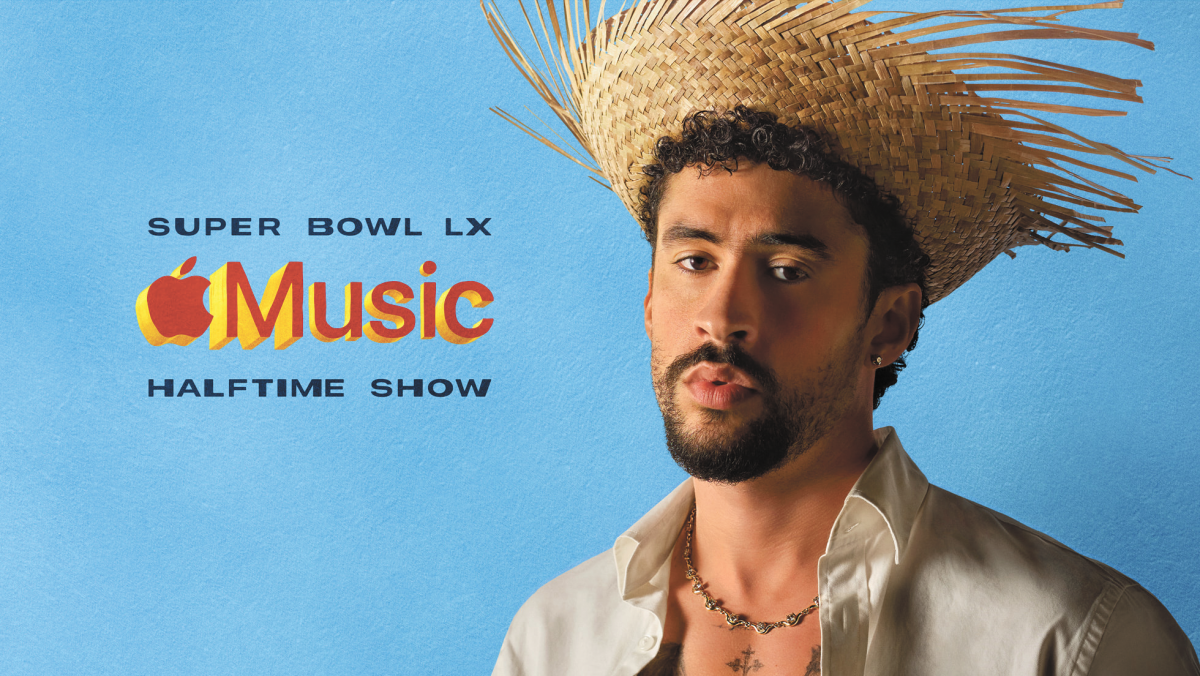
Emerging through an illusion of Puerto Rico’s sugar cane fields with the sun hanging low over Levi’s Stadium, Bad Bunny, the first Latin American artist to win Album of the Year and the first Latin American artist to headline a Super Bowl halftime show performed entirely in Spanish, took viewers on a vibrant tour of his homeland’s culture while performing his music. He reminded fans they didn’t need to speak Spanish to enjoy the show, just to dance. I don’t fully understand Spanish, but his performance had me on my feet the entire time.
Benito Antonio Martínez Ocasio, born March 10, 1994, in San Juan, Puerto Rico, has become a global superstar, known for bringing Latin pop into the mainstream and earning numerous awards after first rising on SoundCloud.
Hid halftime show was rich with symbols of Puerto Rican life. Bad Bunny walked through the sugar cane fields in a custom white leather football jersey by Zara. The stage came alive with jíbaros in pavas, viejitos playing dominoes, a piragua stand, and even a nail salon. He opened with “Tití Me Preguntó” before moving into “Yo Perreo Sola,” reappearing atop the casitas with guest appearances from Jessica Alba, Pedro Pascal, and Cardi B.
In a tribute to the artists who paved his way, Bad Bunny crashed through the roof as Daddy Yankee’s “Gasolina” played briefly. Later, Ricky Martin appeared to sing “Lo Que Le Pasó a Hawaii,” delivering one of the most moving moments of the show. This marked Martin as the first openly gay male to perform at a Super Bowl halftime show. The performance of this song made me stop dancing and pay close attention to the emotional depth of the music.
Bad Bunny also reminded the audience of his global reach, introducing himself with: “Mi nombre es Benito Antonio Martínez Ocasio. Y si hoy estoy aquí en el Super Bowl 60, es porque nunca, nunca dejé de creer en mí y tú también deberías de creer en ti, vales más de lo que piensas.”(English translation: “My name is Benito Antonio Martínez Ocasio, and if I’m here today at Super Bowl 60, it’s because I never, ever stopped believing in myself, and you should also believe in yourself you’re worth more than you think.”)
The show even included a live wedding. A couple who had originally invited Bad Bunny to their wedding exchanged vows on the halftime stage, with the artist serving as their witness and signing their marriage license. Guests, including children, celebrated in real time, and the newlyweds returned later to cut their cake during “BAILE INOLVIDABLE”, a song whose lyrics struck a personal chord: “Tú me enseñaste a querer, me enseñaste a bailar” (“You taught me how to love, you taught me how to dance”). Watching this, I realized that in just one performance, he had taught me a million ways to dance and a million ways to love. He brought the viewers joy, movement, and emotion. The moment perfectly captured the celebration of connection, culture, and the power of music to bring people together.
A poignant moment followed, showing a young boy watching Bad Bunny’s Grammy acceptance speech for Album of the Year, a recreation of the historic moment just a week prior. Bad Bunny then handed him the actual Grammy trophy. The boy, 5-year-old actor Lincoln Fox Ramadan, was widely interpreted as a young version of Bad Bunny, symbolizing opportunity and hope. Some viewers also linked the moment to Liam Conejo Ramos, a 5-year-old who was detained by immigration authorities, highlighting themes of immigration and belonging.
Other striking visuals included power lines exploding across the stage as jíbaros climbed them alongside Bad Bunny while he performed “El Apagón” (“The Blackout”), one of his most political songs. The power lines referenced frequent outages in Puerto Rico following Hurricane Maria, and he carried the Puerto Rican flag, featuring red, white, and baby blue, a nod to the independence movement.
The show was thought to be heavily political in reference to Bad Bunny’s criticisms of President Donald Trump and his advocacy at the Grammys. But the political references were subtle and the show still kept its celebratory spirit. In the final minutes, performers ran across the stage waving flags from multiple countries, with a message on the jumbotron reading, “The only thing more powerful than hate is love”. “God bless America,” and the sound of traditional Puerto Rican instruments like the pandero and cuatro were pulsing through the stadium. This moment truly sent chills through my body.
In just 13 minutes, Bad Bunny transported viewers to Puerto Rico, celebrating its culture, resilience, and music. He highlighted Latino identity, immigration issues, and Puerto Rican pride all while keeping the audience dancing.
Benito Antonio Martínez Ocasio made history in countless ways during this halftime show. If you didn’t know him before, you do now. Fans are already calling it the “Benito Bowl,” and after witnessing this performance, I couldn’t agree more.